

Distraction toolboxes are full of toys, games, puzzles and pain relief devices that help children feel less anxious before, during and after medical tests and treatments.
For a child having their first procedure, you want it to be a positive, reassuring experience. For a child facing ongoing treatment, you want each visit to be as calm and comfortable as possible.
Whether you are a nurse or play specialist working with little ones, or a parent of a child who needs regular treatment, here are 20 tools to reduce fear and anxiety during medical procedures.
What is a distraction box?
A distraction box is a kit of toys, puzzles and sensory items kept ready for medical procedures. Staff and parents use it to give a child something absorbing to focus on while an injection, blood test or IV placement happens. Most boxes hold a mix of items suited to different ages.
Why distraction works
The brain can only process so much at once. When a child is genuinely absorbed in a task, less attention is available for the needle. This is why active engagement works better than simply telling a child to look away. Looking away is passive. Counting, finding, building or blowing gives the brain a job.
Distraction is one part of a bigger picture. If the fear is significant or ongoing, see What Is Trypanophobia? for what needle phobia is and where it comes from, or How to Overcome Needle Phobia for a full set of practical steps.
When to start the distraction
Start before the procedure, not after the needle is out. Distraction works best when a child is already focused on something else by the time the needle comes near. Starting once they are upset is much harder. For a step-by-step plan for the days before an appointment, see our checklist for children who are scared of needles.
Distraction toys that make children breathe out
Slow breathing settles the nervous system, and young children follow a toy more easily than an instruction.
- Bubble liquid and a bubble wand. Blowing bubbles forces a long, slow exhale without you having to ask for one.
- Windmill or pinwheel. Same effect as bubbles with less mess, which suits a clinic room.
Distraction tools that need concentration
Best for children around four and older, when finding and counting tasks hold attention.
- Where's Wally books. Searching a busy page is absorbing and easy to stop and start.
- Rubik's cube. Suits older children and teenagers who find younger toys babyish.
- Lego. A small handful of bricks and a simple build is enough.
- Wooden blocks. Good for toddlers and preschoolers who want to stack rather than solve.
- Pop-up books. The surprise element holds attention for younger children.
Distraction toys for hands
Something to squeeze or fiddle with gives a child somewhere to put the tension.
- Stress balls. Squeezing gives the free hand a job during the procedure.
- Slinky. Passing it hand to hand is repetitive and calming.
- Fidget spinners. Useful for children who need constant movement.
- Liquid in-motion toys. The slow movement is soothing to watch and needs no effort.
- Soft toys. A familiar toy from home is often more reassuring than anything in the box.
Distraction toys for babies and toddlers
Younger children respond to novelty and faces more than to tasks.
- Finger puppets. A puppet talking to a baby holds attention at close range.
- Dress ups such as a red nose, hat or mask. Staff wearing something silly shifts the mood of the room.
- Stickers. Choosing one gives a toddler a small decision to make.
- Lollypops. Sucking is calming, and it gives a clear signal the hard part is over.
Creative and screen-based options
- Colouring in and art supplies. Suits children who want something quiet and open-ended.
- Headphones and a device. A favourite show or music works well for older children and teenagers.
Pain relief tools that work alongside distraction
Distraction handles attention. These handle the pain signal itself.
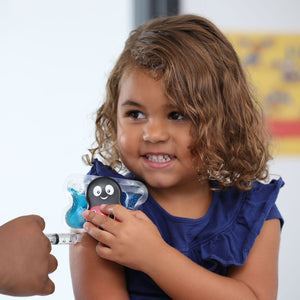
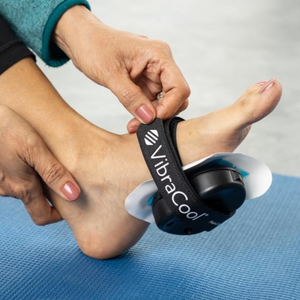
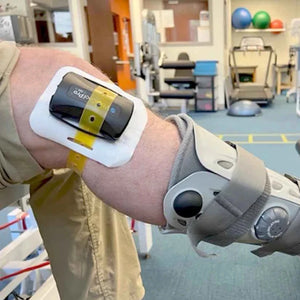
- Buzzy. Combines cold and vibration at the injection site to reduce needle pain by up to 80 percent, and is backed by more than 100 clinical trials. If you are not sure which model suits you, compare the Buzzy models for home and clinic use.
- Buzzy DistrACTION Cards. Credit card sized cards on a snap ring with counting and finding tasks, with age-appropriate questions on the back.
Frequently Asked Questions
What should I put in a distraction box for medical procedures?
A good distraction box has a mix of items for different ages: something to blow, something to squeeze, something to search or count, and something familiar from home. Add a pain relief device if injections are frequent.
What age does distraction work best for?
Distraction helps at every age, but the type changes. Babies and toddlers respond to faces, puppets and novelty. From around four, counting and finding tasks work better. Older children and teenagers often prefer music or a screen.
When should you start distracting a child during a procedure?
Before it starts. A child who is already absorbed in something when the needle approaches copes better than one you try to distract after they have become upset.
How can distraction help children with ADHD or autism?
Medical procedures can be harder for children with ADHD or autism, often because of the waiting, the unpredictability, and how much is happening in a clinic room at once. Distraction gives a child one clear thing to focus on instead of everything at once.
What works varies a lot between children. Some settle with a repetitive item like a slinky or a liquid in-motion toy. Others do better with headphones and a familiar show, which cuts the noise in the room and gives them something they already know. Ask the child or their parent what usually helps at appointments, because families generally know what works before staff do.
For clinicians working with patients who avoid needle procedures, there is a published primary care protocol for patients with intellectual and developmental disabilities worth reading.
Do distraction techniques work for adults?
Yes. Adults use conversation, music and controlled breathing the same way. The principle is identical, only the tools change.
What is the difference between distraction and pain relief?
Distraction changes where attention goes. Pain relief changes the pain signal itself. Using both together works better than either alone.
Mentioned in this article
More stories

Taking Fear and Pain Out of Shots for Kids
