

Heel stick blood collection is one of the most common procedures performed on newborns. It is also one of the most consistently undertreated sources of pain in neonatal care.
Research shows that newborns undergo an average of 98 painful procedures within the first 14 days of life. Healthcare providers address pain management in only 20% of these procedures. More than half are performed without any pain relief at all.
A 2025 randomized controlled trial has now added important clinical evidence to change that. The study found that Buzzy, a drug-free vibration and cold device, reduced infant pain scores by 44% during heel stick procedures. This is the first study to evaluate Buzzy specifically for this procedure in the neonatal population.
Why Heel Stick Pain in Newborns Matters More Than Most Clinicians Realise
Newborns are not less sensitive to pain than older patients. They are more sensitive. Neonates have a higher density of nociceptors than adults, meaning they perceive pain more intensely.
Unmanaged procedural pain in early life carries real clinical consequences:
- Decreased blood oxygen saturation
- Increased heart rate and intracranial pressure, raising the risk of intraventricular haemorrhage
- Weakened immune response, increasing susceptibility to infection
- Negative effects on brain development and long-term pain processing
Despite this, most non-pharmacological pain management options in neonatal settings are underused. The most common reason? Preparation time and application complexity.
What the 2025 Study Found
The study was conducted at a Family Health Centre in eastern Turkey between September and November 2024. It followed CONSORT guidelines and was registered on ClinicalTrials.gov (NCT06773325).
80 full-term newborns between 37 and 42 weeks gestational age, all within the first 28 days of life, were randomized into two equal groups.
The Buzzy group had the device applied approximately 30 seconds before the heel stick. The control group received no intervention. Pain and comfort were assessed using two validated clinical scales before, during, and after the procedure.
The results were statistically significant (p less than 0.001):
- During the procedure, the control group recorded an average pain score of 6.00 out of 7. The Buzzy group recorded 3.33. That is a 44% reduction in pain.
- After the procedure, pain scores in the control group remained elevated at 4.57. The Buzzy group dropped to 1.58, close to baseline.
- Comfort levels in the Buzzy group stayed within the normal clinical range throughout the procedure. The control group dropped well below it and took significantly longer to recover.
The study authors concluded that Buzzy should be integrated into neonatal pain management protocols in clinical settings.
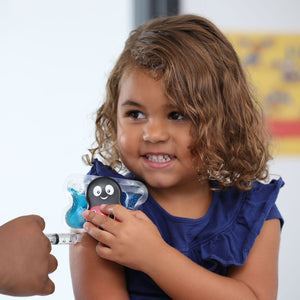
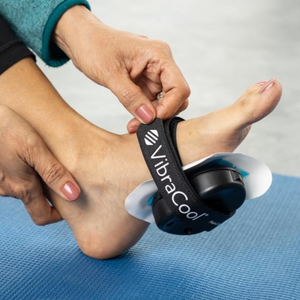
Buzzy combines mechanical vibration and cold application. During the study, it was placed below the knee at the sural nerve, approximately 30 seconds before the procedure.
This works by flooding the nervous system with non-painful sensations that compete with and block pain signals before they reach the brain. This is known as the pain gate theory, the same principle that explains why rubbing a bumped elbow makes it hurt less.
The result is measurable acute pain reduction at the point of care, with no medication, no side effects, and no added procedural time.
How Does Buzzy Compare to Other Non-Pharmacological Methods?
Common non-pharmacological options used during heel stick include swaddling, breastfeeding, heel warming, non-nutritive sucking, skin-to-skin contact, and oral sucrose. These methods have varying levels of evidence and practical limitations.
Most require parental involvement, setup time, or specific conditions to be effective. Many are also difficult to standardise across clinical settings.
Buzzy is reusable, cost-effective, and takes seconds to apply. It requires no preparation beyond removing the ice pack from the freezer 10 minutes before use. It can be applied by any nurse or clinician without additional training.
What This Means for Clinical Practice
This trial is the first to evaluate Buzzy specifically for heel stick in the neonatal population. It builds on an existing body of evidence from children aged 2 to 18 years across immunizations, blood draws, and IV cannulation.
The study authors recommend that healthcare professionals prioritise non-pharmacological interventions like Buzzy for painful procedures in newborns. Widespread use in nursing care has the potential to improve pain management outcomes, enhance comfort, and increase patient and family satisfaction.
For neonatal nurses and pediatric clinicians, the evidence is clear. A simple, drug-free, 30-second intervention can make a significant clinical difference for the most vulnerable patients.
Frequently Asked Questions
Does Buzzy work on newborns?
Yes. A 2025 randomized controlled trial confirmed that Buzzy significantly reduces pain and maintains comfort in newborns during heel stick blood collection. It is the first study to evaluate Buzzy specifically in the neonatal population.
How does Buzzy reduce pain during heel stick?
Buzzy uses vibration and cold applied at the sural nerve below the knee, approximately 30 seconds before the procedure. This blocks pain signals before they reach the brain, based on the pain gate theory.
Is Buzzy safe for newborns?
The 2025 study included full-term newborns from 37 to 42 weeks gestational age within the first 28 days of life. No adverse effects were reported. Infants with compromised skin integrity, nerve impairment, or specific metabolic conditions were excluded from the study.
What is the best non-pharmacological pain relief for heel stick in newborns?
Evidence supports several methods including swaddling, oral sucrose, breastfeeding, and vibration therapy. The 2025 RCT shows Buzzy is an effective, fast, and practical option that does not require parental involvement or extended preparation time.
Can Buzzy be used in a NICU or Family Health Centre?
Yes. The 2025 study was conducted in a Family Health Centre setting. The study authors recommend integrating Buzzy into neonatal pain management protocols across clinical settings.
Reference
Bulduk M, Ayşin N, Can V, Ayşin JT, Dilbilir Y, Kurt Can E. The effect of Buzzy application on pain and comfort level during heel stick in newborns: a randomized controlled study. Anatolian Curr Med J. 2025;7(2):170-176.