


Let's be honest. Most advice about needle phobia sounds like it was written by someone who has never actually been terrified of a needle in their life.
"Just breathe." "Look away." "It'll be over in a second."
If you have needle phobia — or you're watching your child fall apart at the sight of a syringe — you already know that advice like that doesn't touch the sides. The fear isn't in your head. It's in your body. Your heart races before you even sit down. Your legs feel like they want to carry you out the door. Sometimes people faint.
That's not weakness. That's needle phobia.
The good news is that it's genuinely manageable. Not by gritting your teeth and pushing through, but by understanding what's actually happening and doing something practical about it. If you want the full picture of why needle phobia happens, how common it is, and why ignoring it makes things worse, read Why You Shouldn't Ignore Needle Fear. For a plain explanation of what trypanophobia actually is and where it comes from, see What Is Trypanophobia?
Here's everything you need to know about actually doing something about it.
How Needle Phobia Usually Starts
Most people can trace their fear back to a specific moment — usually in childhood.
A painful vaccination. Being held down during a blood test. A needle that had to be done twice. It doesn't always take much. When a young child experiences significant pain or distress during an injection, the brain stores that moment as a genuine threat. Every subsequent needle experience either reinforces that memory or starts to soften it.
For most kids, the fear fades as they get older. But for a significant number, it doesn't — especially if their early injection experiences kept being painful or stressful. By adulthood the fear can be deeply wired in, and the cycle looks something like this:
Anticipation of needle → anxiety → heightened pain sensitivity → painful injection → stronger fear → more avoidance
Avoidance is the part that makes it worse. Every time you cancel a blood test or put off a vaccine, your brain gets the message: "Good call. That was definitely dangerous." The fear gets reinforced without you even having to go near a needle.
What Needle Phobia Actually Costs You
This is the part people don't always talk about.
Needle phobia isn't just uncomfortable — it can have real consequences for your health. People with untreated needle phobia commonly:
- Skip routine blood tests, which means conditions go undetected
- Delay or avoid vaccinations, leaving themselves and those around them vulnerable
- Put off treatments that require injections — including management of diabetes, fertility treatment, cancer care, and more
- Experience significant anxiety in the lead-up to any medical appointment, even ones that don't involve needles
If you've been putting things off because of this, you're not alone — and more importantly, you don't have to keep doing it.
How to Get Over a Fear of Needles
There is no single cure for a fear of needles, but a combination of approaches works for most people. Reduce the pain of the injection itself with cold and vibration at the site, which is how devices like Buzzy work, use active distraction, and control your breathing. For severe phobia, add CBT or exposure therapy.
There's no single magic fix, but there are several approaches that genuinely work. The best results usually come from combining more than one.
Your Options at a Glance
Cognitive Behavioural Therapy (CBT) helps you work through the thoughts that keep the fear going, usually over 6 to 10 sessions with a psychologist.
Exposure Therapy gradually introduces needle-related situations in a safe, controlled way, building from photos up to the real thing.
Coping Tactics help on the day itself. These include asking for numbing cream, lying down if you're prone to fainting, controlled breathing, active distraction, and using a device like Buzzy, which reduces needle pain by up to 80 percent through cold and vibration at the injection site.
The sections below go into detail on each one.
1. Understand What's Happening in Your Body
This sounds simple but it matters more than people realise. When you understand that your fear response is automatic and physiological — not a personality flaw or a sign of weakness — it changes your relationship with it. You stop fighting yourself and start working with what's actually happening.
2. Reduce the Pain of the Injection Itself
This is where most people start — and for good reason. A huge part of what sustains needle phobia is the anticipation of pain. Reduce the pain and you start to break the cycle.
Cold and vibration are two of the most clinically supported ways to do this. They work by activating something called the gate control theory of pain — the idea that the brain can only process a limited number of sensory signals at once. When you introduce strong sensations like cold and vibration near the injection site, they compete with the pain signal before it reaches the brain. Less pain gets through.
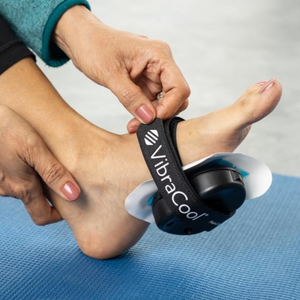
This is exactly how Buzzy works. Buzzy is a small handheld device that combines cold ice wings with gentle vibration, placed near the injection site just before and during the procedure. It is FDA cleared to control needle pain from injections, blood draws and IVs, and clinical studies have shown it can reduce needle pain by up to 80%. It's used by parents, adults managing needle anxiety, and healthcare professionals across Australia and New Zealand — and it works for both children and adults.
It doesn't require a prescription. It doesn't need a therapist. You can use it at your next appointment.
👉 Shop Buzzy — and make your next injection a completely different experience
3. Use Distraction Actively
Distraction isn't just something to do to pass the time. When used deliberately, it's a proven pain reduction technique.
For children, this means something genuinely engaging — a favourite show on a tablet, a silly conversation, blowing bubbles, or using Buzzy's distraction cards. The goal is to give the brain something else to process so it's not hyperfocused on the needle. For a full list of what to keep on hand, see our distraction toolbox guide.
For adults, it can be as simple as having a conversation, listening to music, or focusing on controlled breathing. The key is active engagement — passive distraction (just looking away) is far less effective than actually absorbing your brain in something else.
4. Try Controlled Breathing
When anxiety kicks in, breathing becomes shallow and fast — which actually amplifies the fear response. Slow, deliberate breathing counteracts this.
Try this before and during your next injection:
- Breathe in slowly through your nose for 4 counts
- Hold for 2 counts
- Breathe out slowly through your mouth for 6 counts
The longer exhale is important — it activates the parasympathetic nervous system (your body's calm-down mode) more effectively than equal inhale and exhale.
5. How to Stop Fainting at Needles
If fainting is your main concern, there's a specific technique called Applied Muscle Tension that's worth knowing about. It involves tensing the muscles in your legs, arms and core before and during the injection to prevent the blood pressure drop that causes vasovagal fainting. Sitting or lying down and telling your provider in advance both help as well. It sounds simple, and it is — but it works remarkably well for people who are prone to fainting around needles.
6. Talk to Your Healthcare Provider Beforehand
This one is underused. Most GPs, nurses and vaccination clinic staff are genuinely experienced with needle phobia and can adapt how they work with you. Letting them know in advance means they can:
- Use numbing cream before the injection
- Position you lying down to reduce fainting risk
- Take extra time and not rush the procedure
- Have support available if you need it
You don't have to white-knuckle it alone. The healthcare professionals giving you that injection have almost certainly seen needle phobia before. Tell them.
7. Treatment Options for Severe Needle Phobia
If needle phobia is significantly affecting your ability to access healthcare, it's worth speaking to a psychologist. Cognitive Behavioural Therapy (CBT) and gradual exposure therapy are both well-evidenced approaches for treating specific phobias, and needle phobia responds particularly well to them.
This doesn't mean years of therapy. Many people see meaningful improvement in as few as 6 to 10 sessions.
How to Help Someone Else With Needle Phobia
If you are supporting someone else, the most useful thing you can do is take it seriously. Telling an adult to stop being silly, or holding a child still, both make the next appointment harder.
Ask what they want before the appointment rather than during it. Some people want a countdown, others want no warning at all. Some want to watch, and about one in five people cope better watching than looking away. Tell the nurse or GP in advance so nobody is improvising in the room.
For a child, stay calm yourself. Children read parental anxiety quickly, and a parent who is visibly worried makes the room feel less safe.
If injections are a regular part of their care, giving them something they control makes a difference. Handing a child Buzzy to hold and position themselves gives them a job and some say in what happens, which matters as much as the pain reduction.
Helping a Child Overcome Needle Phobia
Everything above applies to children too — but there are a few extra things worth knowing.
The earlier you act, the better. Children who have consistently less painful injection experiences are far less likely to develop lasting needle phobia. If your child already has a fear, the approach is the same: reduce the pain, use distraction, keep the environment calm, and wherever possible avoid restraining them against their will, which can create trauma rather than resolve it.
Be honest with them. Don't tell a child their injection won't hurt if it might. That breaks trust and makes the next one harder. Instead, acknowledge the discomfort and give them tools — like Buzzy — that genuinely help.
Watch your own reactions. Children are incredibly good at picking up on parental anxiety. If you're visibly nervous about needles yourself, they'll feel it. Try to stay calm and matter-of-fact, even if you have to fake it a little.
Celebrate afterwards. Not in a "you were so brave!" way that implies it was terrifying — but in a "you did it, let's do something fun" way that creates a positive memory to associate with the experience.
The Bottom Line
Needle phobia is real, it's common, and it's not something you just push through by being tougher. It's a physiological response that can be genuinely addressed — with the right combination of pain reduction, distraction, breathing, and where needed, professional support.
The most important thing you can do is stop letting it quietly run the show. Because every blood test you skip, every vaccine you put off, every appointment you dread for weeks beforehand — that's needle phobia costing you something.
It doesn't have to.
Start small. Try one thing differently at your next injection. Use Buzzy. Tell your nurse. Breathe slower. Give your brain something else to do.
A single less painful experience can genuinely start to change the pattern — for you, and for your children.
Frequently Asked Questions
How do you get over a fear of needles fast?
There is no instant fix, but the fastest change most people notice comes from reducing the pain of the injection itself. Cold and vibration applied at the site work on contact, which is what Buzzy is designed to do. Numbing cream also works but needs around 45 minutes to take effect.
What treatment is available for needle phobia in Australia?
Two things need addressing: the fear and the pain. For the fear, Cognitive Behavioural Therapy and graded exposure therapy are the best-evidenced options, usually over six to ten sessions with a psychologist, and your GP can refer you. For the pain, Buzzy is FDA cleared to control needle pain from injections, blood draws and IVs, and reduces it by up to 80 percent using cold and vibration at the site. Addressing both together works better than either alone.
How do you help someone with needle phobia?
Ask what they want before the appointment, tell the provider in advance, and avoid dismissing the fear or restraining a child. Reducing the pain of the injection itself helps break the cycle, whether that is numbing cream, or cold and vibration from a device like Buzzy.
Can needle phobia be cured completely?
For many people, yes — especially with professional support like CBT and exposure therapy. For others, it's less about a cure and more about managing it effectively enough that it stops getting in the way. Either outcome is a significant improvement on where most people start.
Is needle phobia more common in children or adults?
It often starts in childhood but persists into adulthood for a significant number of people. See Why You Shouldn't Ignore Needle Fear for a full breakdown of how common it is and why it happens.
What's the fastest way to reduce needle pain in the moment?
Cold and vibration applied near the injection site — which is exactly what Buzzy is designed to do. Clinical evidence shows it can reduce pain by up to 80%, making it one of the most effective in-the-moment tools available without a prescription.
What if I faint every time I have an injection?
You're likely experiencing a vasovagal response. Tell your healthcare provider before your appointment so they can have you lying down during the procedure. The Applied Muscle Tension technique can also help significantly. You don't have to just accept fainting as inevitable.
Can I use Buzzy for my child's vaccinations?
Absolutely. Buzzy was originally designed for children and is used in paediatric clinics, hospitals, and homes across Australia and New Zealand. It's suitable for all ages and works particularly well when combined with distraction techniques.
Does talking about needle phobia with a GP actually help?
Yes — more than most people expect. A good GP can refer you to appropriate support, arrange numbing cream, adjust how the procedure is done, and make the whole experience significantly less stressful. Don't underestimate how much a prepared healthcare provider can change the experience.