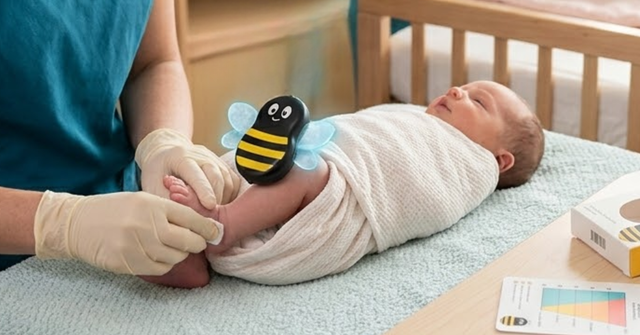
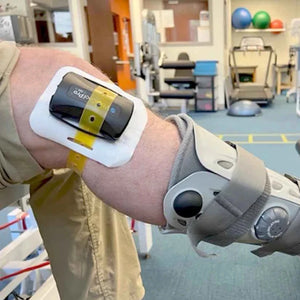


TENS machines have been a staple of physiotherapy clinics and home pain management since the 1970s. They are affordable, widely available, and reasonably well researched. For many patients they offer a degree of short term relief.
But for musculoskeletal pain specifically, including tendinopathies, joint pain, and post surgical recovery, a growing body of clinical evidence points to a different approach producing significantly stronger results.
This article explains the nerve science behind both TENS and mechanical vibration therapy, why one reaches deeper nerve pathways than the other, and what peer reviewed clinical trial data shows when the two are compared head to head.
What Is the Gate Control Theory of Pain and How Does It Affect Pain Management?
To understand why TENS and vibration therapy produce different results, you need to start with gate control theory. First described by Ronald Melzack and Patrick Wall in 1965, it explains how a neurological gate mechanism in the dorsal horn of the spinal cord can either block or allow pain signals to travel to the brain.
According to Pain Care Labs, sharp pain is transmitted on small nerve fibres called A-delta nerves. Motion signals travel alongside these pain fibres on larger A-beta nerves. Temperature and pressure signals travel on C fibres.
When the larger A-beta and C fibres are highly stimulated, they close the gate, overwhelming the nervous system with competing sensory information that drowns out the pain signal. Pain Care Labs describe this as excess vibration or cold being able to overwhelm or dilute sharp pain, the same way running a burn under cold water stops the pain, or rubbing a bumped elbow brings instant relief.
Both TENS and mechanical vibration work on this same principle. But they stimulate different nerve receptors at different depths, with very different clinical outcomes.
How Does a TENS Machine Work on the Nerves?
A TENS machine sends low voltage electrical pulses through adhesive electrode pads placed on the surface of the skin. According to Pain Care Labs, the electrical current travels the shortest possible distance, stimulating only the most surface level nerves in the skin.
These surface receptors, called Meissner corpuscles, detect light touch and low frequency vibration. When stimulated by electrical current they create a tingly sensation that partially interferes with the pain signal travelling to the brain.
At higher frequencies some TENS units push electricity deeper by twitching the muscles. This can produce stronger short term relief but comes with limitations around patient comfort, pacemaker safety, and the requirement for precise electrode placement.
TENS units cannot be used safely in patients with pacemakers because the electrical current passes through the body.
Why Does TENS Not Always Work Consistently for Musculoskeletal and Chronic Pain Conditions?
For conditions involving surface level nerve sensitivity, TENS can produce meaningful short term relief. But for conditions rooted in deeper muscle restriction and joint inflammation, reaching only the surface level nerves becomes a significant clinical limitation.
Musculoskeletal conditions like tendinopathies, knee pain, shoulder pain, and post surgical pain involve deeper tissue structures. The nerve pathways most relevant to these conditions sit deeper than the surface level receptors TENS primarily stimulates.
Research also shows the body can adapt to the electrical signal over time, reducing its effectiveness the longer it is used. Relief is typically only present while the device is switched on, and the adhesive pads require regular replacement, adding ongoing cost.
This is why many patients with musculoskeletal conditions report inconsistent or short lived relief from TENS, and why clinicians are increasingly looking for drug-free alternatives that reach deeper into the pain pathway.
How Does High Frequency Mechanical Vibration Stimulate the Nerves Differently?
This is where the science becomes particularly significant for clinicians.
Pain Care Labs state that nerves are designed to feel motion, and that M-Stim mechanical stimulation penetrates deeper into the body, triggering sensation receptors for movement and positioning which the brain rates as more important than pain or surface level touch sensations.
A peer reviewed crossover trial comparing VibraCool against TENS, presented at the American Academy of Physical Medicine and Rehabilitation in 2019, stated its specific objective as evaluating whether high frequency mechanical vibration in the Pacinian corpuscle stimulation range of 180 to 250 Hz relieves pain more than electrical stimulation.
Pacinian corpuscles are deep mechanoreceptors located primarily around the joints and deeper tissue structures. Because vibration uses natural mechanical motion rather than electrical current, it reaches these deeper receptors without forcing electricity through tissue or twitching muscles. The body responds to it the way it is naturally designed to.
Applied directly over the site of pain, high frequency vibration floods the larger A-beta nerve fibres and works to close the pain gate from deeper nerve pathways that electrical stimulation cannot reach.
Why Combining Vibration and Cold Produces Stronger Pain Relief Than Either Alone
VibraCool adds a second distinct pain relief mechanism by combining mechanical vibration with cryotherapy simultaneously.
Pain Care Labs explain this through Descending Noxious Inhibitory Control, or DNIC. While gate control works locally at the site of pain, DNIC works at a brain level. Intense cold activates a supraspinal modulation that raises the body's overall pain threshold. In practical terms, when one sensation is sufficiently intense, the brain turns the volume down on pain signals across the body.
There is an additional benefit to combining the two. Cryotherapy alone reduces inflammation but also constricts blood flow. According to the VibraCool literature review, high frequency vibration vasodilates the tissue, increasing local blood flow and separating muscle fibres to reduce stiffness. Together, cold and vibration complement each other in ways neither achieves alone.
This dual mechanism, gate control through deep mechanical stimulation and DNIC through intense cold, is what distinguishes VibraCool from both TENS and cryotherapy used separately.
What Does the Peer Reviewed Research Show When TENS and Vibration Therapy Are Compared Directly?
A randomised crossover trial presented at the AAPM&R Annual Assembly in November 2019 by Marovino and Baxter directly compared VibraCool high frequency vibration against TENS across a range of musculoskeletal conditions including osteoarthritis, sacroiliac dysfunction, shoulder injury, post surgical recovery, epicondylitis, and fibromyalgia.
The results were statistically significant.
Mean pain relief with VibraCool scored 3.60 out of 10 on the visual analog scale. Mean pain relief with TENS scored 1.40 out of 10. The mean difference was 2.2 with a P value of less than 0.0001. That makes vibration therapy 3.4x more effective than TENS in this trial.
The study conclusion stated that mechanical high frequency vibration in the Pacinian corpuscle frequency was superior to electrical stimulation for pain relief, with highest efficacy for injury, post surgical, and spinal conditions. Results were least pronounced for osteoarthritis, where TENS remains a reasonable clinical option.
This was a pilot level peer reviewed study and larger scale trials are ongoing. The results are consistent with the broader body of research on mechanical versus electrical stimulation, with 50+ published trials supporting M-Stim technology.
A separate pilot study examining VibraCool use following ACL reconstruction found that patients used 35% fewer opioids in the first week following surgery compared to a coached group at the same institution actively attempting to reduce opioid use. This has direct implications for post surgical pain management protocols where reducing opioid dependence is a clinical priority.
Vibration Therapy for Plantar Fasciitis
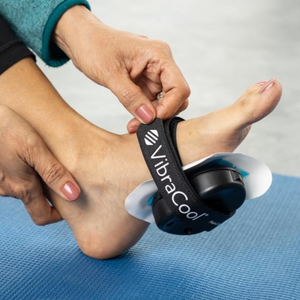
Plantar fasciitis involves both irritation of the plantar fascia and muscle restriction in the arch of the foot. VibraCool Plantar is designed specifically to address both simultaneously, with the strap and ice pack positioning placing high frequency vibration and cold directly at the arch of the foot. A 20 minute application provides relief from overuse that can last for hours, without drugs, electrical current, or replacement consumables.
M-Stim vs TENS: A Summary for Clinicians
- TENS can suit osteoarthritis, period pain, and people who respond well to electrical stimulation. It is a well established low risk adjunct with strong familiarity in clinical settings. Not appropriate for patients with pacemakers.
- VibraCool M-Stim is the stronger option for musculoskeletal pain, tendinopathies, post surgical recovery, and conditions involving deeper muscle restriction and joint inflammation. Safe with pacemakers. No replacement consumables. Battery powered and portable for use in clinic or at home.
In a peer reviewed direct head to head comparison, VibraCool outperformed TENS by 240 to 340% for musculoskeletal pain relief.
Frequently Asked Questions
Does a TENS machine actually work for musculoskeletal pain?
TENS can provide short term relief for some people with musculoskeletal pain. It works by sending electrical impulses through the skin to partially interfere with the pain signal. However the evidence is mixed, particularly for conditions involving deeper muscle restriction and joint inflammation. Relief is usually only present while the device is switched on. For conditions like tendinopathies, post surgical pain, and spinal pain, clinical research shows that high frequency mechanical vibration therapy significantly outperforms electrical stimulation. In a peer reviewed crossover trial, mechanical vibration scored 3.60 versus 1.40 for TENS on a visual analog scale, with a P value of less than 0.0001.
Why does my TENS machine stop working after a while?
The body can adapt to the electrical signal over time, which reduces the level of pain interference. The surface level nerve stimulation that TENS relies on also does not address the deeper muscle restriction and inflammation that often drives chronic musculoskeletal pain. If your TENS machine has stopped providing adequate relief, it may be worth exploring a drug-free alternative that targets deeper nerve pathways.
What is a good drug-free alternative to a TENS machine for pain relief?
Mechanical vibration therapy is the most clinically supported drug-free alternative to TENS for musculoskeletal pain. Unlike TENS, which uses electrical stimulation to reach surface level nerves, high frequency vibration targets the Pacinian corpuscles, the deep mechanoreceptors located around the joints. This allows it to reach nerve pathways the brain rates as more important than pain. VibraCool is now available in Australia and New Zealand, combining this technology with cryotherapy. In a head to head clinical trial it outperformed TENS by 240 to 340% for musculoskeletal pain relief.
What is better than a TENS machine for chronic pain at home?
For home use, the key limitations of TENS are that relief only lasts while the device is on, the pads need replacing regularly, and it cannot be used by patients with pacemakers. High frequency vibration therapy addresses all three of these limitations. It works through mechanical motion rather than electrical current, has no replacement consumables, is suitable for people with pacemakers, and clinical research shows stronger and longer lasting relief. VibraCool is a wearable, battery powered device available in Australia and New Zealand that delivers this therapy directly at the site of pain.
Can you use a pain relief device if you have a pacemaker?
TENS machines cannot be safely used by people with pacemakers because the electrical current passes through the body. Mechanical vibration devices like VibraCool are suitable for people with pacemakers because they use physical motion rather than electrical energy. No electrical current is transferred into or through the body.
Is there a drug-free pain relief device that works for tendon pain and tendinopathies?
Yes. A review published in Practical Pain Management described VibraCool as valuable for very difficult to treat enthesopathic conditions, including tendinopathies that are unresponsive or resistant to other forms of energy or manual therapies. This is one area where TENS has shown limited effectiveness and where mechanical vibration therapy has a stronger evidence base.
What is the best drug-free pain relief device available in Australia for musculoskeletal pain?
For musculoskeletal pain, tendinopathies, joint pain, and post surgical recovery, VibraCool is one of the most clinically supported drug-free devices now available in Australia and New Zealand. It is FDA 510(k) cleared, TGA accepted, and supported by 50+ published trials on M-Stim technology. It is available through Buzzy4Shots, the official distributor for Australia and New Zealand, and may be claimable under NDIS depending on your plan and intended use.
Where to Access VibraCool in Australia and New Zealand
VibraCool is available across Australia and New Zealand through Buzzy4Shots, the official distributor. The full range covers plantar fasciitis, knee, shoulder, back, hip, elbow, and ankle conditions. All models are battery powered, portable, and suitable for people with pacemakers. Clinicians can contact us directly for clinical enquiries, bulk orders, or patient referral resources.
References
- Marovino TA, Baxter A. Crossover Trial of Novel Mechanical Oscillatory Vibration Frequency Device versus TENS for Musculoskeletal Pain. PM R. 2019; 11(S2). AAPM&R Annual Assembly 2019. pmrjabstracts.org
- Pain Care Labs. Is VibraCool TENS? resources.paincarelabs.com/faqs/is-vibracool-tens
- Pain Care Labs. Gate Control Theory of Pain. resources.paincarelabs.com/faqs/gate-control-theory-of-pain
- Pain Care Labs. Descending Noxious Inhibitory Control. resources.paincarelabs.com/faqs/descending-noxious-inhibitory-control-dnic
- Pain Care Labs. VibraCool Literature Review. September 2020. paincarelabs.com/research
- Pain Care Labs. Effects of Focal Vibration on Pain and Opioid Usage following ACL Reconstruction. AAPM&R 2019. paincarelabs.com/research
- Tiziano M, Majewski M. Pain Therapy Options for Home. Practical Pain Management 19(1):56-59.