

If you are dealing with this right now, you want a straight answer. So here it is: most people recover fully. And how quickly depends a lot on what you do next.
The Short Answer
Most people see significant improvement within six to twelve weeks with consistent treatment. Full recovery, where heel pain no longer affects your daily life, typically takes three to six months.
That feels like a long time. But you will usually feel much better well before you are fully recovered. The worst of the morning pain tends to ease within the first few weeks. The remaining time is mostly about making sure it does not come back.
Why Does It Take So Long?
The plantar fascia is a thick band of tissue running along the bottom of your foot. Every time you stand, walk, or move, it absorbs load. There is no way to rest it completely the way you would a broken arm in a cast.
That constant use is why it settles slowly. The tissue gets tiny tears from overuse or strain. It also receives relatively little blood flow, which slows the repair process. Every day on your feet, you are asking it to do the very thing that hurt it.
What to Expect at Each Stage
The best time to act. Most people feel meaningful improvement within two to four weeks and are largely pain-free within six to eight weeks. The tissue has not yet changed significantly and the body is still in active repair mode.
Recovery takes a bit longer here. Expect three to four months with a consistent plan. The tissue has started to remodel under repeated stress, so treatment needs to be more targeted.
If it has been months without improvement, recovery can take six months or more once a proper plan is in place. At this stage it is worth seeing a podiatrist or physiotherapist.
What Slows Recovery Down
Leaving it too long before treating it The tissue breaks down further the longer it goes unmanaged. Starting treatment early makes a significant difference.
Stopping when it feels better Pain easing is not the same as the tissue recovering. Many people return to full activity too soon and the pain comes back within days.
Continuing to overload the foot Running through the pain, standing on hard floors without support, or wearing flat shoes means you are re-injuring the fascia faster than it can repair.
Tight calf muscles Tight calves put more strain on the plantar fascia with every step. This is one of the most overlooked reasons plantar fasciitis persists.
What Actually Speeds Recovery Up
The basics work. Consistent calf and foot stretching. Supportive footwear. Reducing the activities that aggravate it. Starting early makes all of these more effective.
Beyond that, increasing blood flow to the injured area is one of the most effective ways to support tissue repair. The plantar fascia recovers slowly partly because it gets relatively little blood flow. Anything that increases circulation there actively helps.
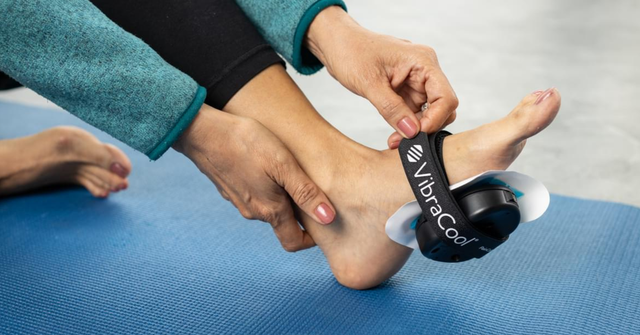
This is where vibration therapy comes in. Focal vibration applied directly to the foot increases blood flow to the plantar fascia, reduces pain, and allows people to stay active rather than resting completely. You can read more about the science on our how VibraCool works page.
These results come from independent peer-reviewed research, not manufacturer claims. You can read the full studies on our VibraCool Research & Clinical Trials page.
VibraCool Plantar
Specifically designed for heel and foot pain. Combines high-frequency M-Stim vibration with freeze-solid ice therapy applied directly to the underside of the foot. Wearable, hands-free, and drug-free.
The same pain researcher and physician who invented Buzzy®, used in over 37 million procedures worldwide to reduce needle pain and fear.
When to See a Podiatrist
If your heel pain has not improved after six weeks of home management, get a professional assessment. A podiatrist or physiotherapist can identify what is driving your plantar fasciitis and build a plan around your specific situation.
They may recommend custom orthotics, shockwave therapy for stubborn chronic cases, a strengthening program for the foot and calf, or taping techniques to offload the fascia during the day.
Surgery is rarely needed. It is only considered after months of consistent treatment have not worked.
More from Buzzy4Shots
- VibraCool Plantar — drug-free heel pain relief
- Shop all VibraCool models
- How VibraCool works
- VibraCool Research & Clinical Trials
- VibraCool for injuries
- Differences between VibraCool models
- NDIS claim information
- TENS vs Mechanical Vibration Therapy: what the research shows
- What is plantar fasciitis and why does my heel hurt?
Plantar fasciitis is not a quick fix. But most people recover fully. The things in your favour are starting early, being consistent, and giving the tissue the right conditions to recover.
If you want a drug-free way to manage the pain at home between appointments, VibraCool Plantar is worth looking at.
Frequently Asked Questions
How long does plantar fasciitis take to recover without treatment?
Without treatment, plantar fasciitis can last anywhere from six months to several years. The tissue breaks down further the longer it goes unmanaged. Early treatment makes a significant difference to recovery time.
Can plantar fasciitis settle on its own?
Mild cases sometimes do resolve with rest. But most people need consistent stretching, load management, and supportive footwear to recover properly. Leaving it unmanaged risks it becoming chronic.
Is it okay to walk with plantar fasciitis?
Yes, in most cases. Complete rest is not usually recommended and can slow recovery by reducing blood flow. The goal is to manage the load, not eliminate it. Supportive footwear and avoiding barefoot walking on hard floors makes a real difference.
What makes plantar fasciitis worse?
Barefoot walking on hard floors, flat unsupportive shoes, running or jumping through the pain, and tight calf muscles all aggravate plantar fasciitis and slow recovery. The morning pain is often worst because the plantar fascia tightens overnight and is then suddenly loaded when you get up.
Does ice help plantar fasciitis?
Yes. Ice reduces inflammation and provides short-term pain relief, especially after activity. Applying cold to the underside of the foot for ten to fifteen minutes after standing or exercise helps manage flare-ups. Devices that combine cold with vibration, like VibraCool Plantar, address both pain relief and blood flow at the same time.
What is the difference between the VibraCool models?
VibraCool comes in four models, each designed for a different area of the body. VibraCool Plantar is specifically designed for foot and heel pain. You can compare all models on our differences between VibraCool models page.
When should I see a doctor about heel pain?
If your heel pain has not improved after six weeks of home management, or if the pain is severe and affecting your ability to walk, see a podiatrist or GP. A proper assessment rules out other causes and gives you a targeted plan.