


If you are dealing with plantar fasciitis, you probably know the feeling well.
You get out of bed in the morning, put your foot on the floor, and feel a sharp pain through your heel. Sometimes it eases once you start moving around. Sometimes it stays all day.
For many people, plantar fasciitis starts gradually. At first it might just feel tight or sore after a long walk, standing at work, or exercising. Over time, the pain can become harder to ignore.
The good news is that plantar fasciitis usually improves with the right support and consistent care. The challenge is that recovery can take time, especially if you are constantly on your feet.
What is plantar fasciitis?
Plantar fasciitis is one of the most common causes of heel pain.
It happens when the plantar fascia becomes irritated. The plantar fascia is the thick band of tissue that runs along the bottom of your foot, connecting your heel to your toes. It helps support the arch of your foot and absorbs pressure while walking and standing.
When this tissue is placed under too much strain, it can become inflamed and painful.
Most people feel the pain around the heel, although some notice aching or tightness through the arch of the foot as well.
What causes plantar fasciitis?
There is usually not one single cause.
Plantar fasciitis often develops over time from repeated strain on the feet. Standing for long hours, running, wearing unsupportive shoes, tight calf muscles, walking on hard floors, or sudden changes in activity levels can all contribute.
Some jobs naturally place more pressure on the feet. Nurses, teachers, retail workers, tradies, hospitality staff, and parents with young children often spend hours standing or walking every day, which can make symptoms worse over time.
Why is plantar fasciitis worse in the morning?
This is one of the most common questions people ask.
During the night, the plantar fascia tightens while the foot is resting. When you first stand up in the morning, the tissue stretches suddenly again, which can cause that sharp heel pain many people describe.
For some people the pain improves after a few minutes of walking. For others it returns after sitting for long periods or after a busy day on their feet.
How long does plantar fasciitis last?
Recovery time varies. Most people see meaningful improvement within six to twelve weeks with consistent care, though some cases take longer.
For a full breakdown of what to expect at each stage, read how long plantar fasciitis takes to recover.
What helps plantar fasciitis?
There is no instant fix, but small consistent changes usually help the most.
Supportive footwear, stretching, massage, rest, and reducing strain on the feet can all make a difference. Many people also find cold therapy helpful because it helps calm soreness and reduce inflammation after long periods of standing or walking.
The problem is that traditional ice packs are awkward to hold in place around the foot, and most people do not have time to sit still with an ice pack several times a day.
What is VibraCool Plantar?
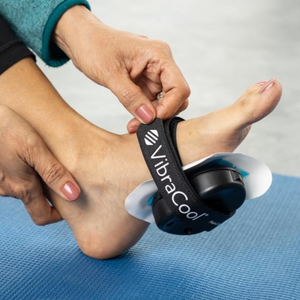
VibraCool Plantar is a wearable wrap that combines cold and vibration therapy to work on contact, providing relief for heel pain, arch pain, and discomfort caused by plantar fasciitis.
The cold pack helps cool and soothe the painful area, while the vibration creates a gentle massage-like sensation that many people find relaxing after a long day on their feet.
Because it wraps securely around the foot, you do not need to balance an ice pack under your heel or constantly reposition it.
People often use VibraCool Plantar after work, after exercise, before bed, or first thing in the morning when heel pain feels at its worst.
Many people also like that it feels more practical and comfortable than using frozen peas or bulky ice packs.
Who can use VibraCool Plantar?
VibraCool Plantar is popular with people who spend a lot of time on their feet.
Runners, nurses, teachers, retail workers, gym-goers, hospitality staff, and busy parents often use it to help soothe sore feet after long days.
It can also be helpful for people who deal with recurring plantar fasciitis flare-ups and want something simple they can use regularly at home.
What about a TENS machine for plantar fasciitis?
A TENS machine is one of the first things people reach for. They are affordable and widely available, and they do provide some temporary relief by interrupting pain signals. For heel and arch pain the limitations are practical: the adhesive pads are awkward to position on the foot, the electrical stimulation stays surface-level, and TENS is not suitable for people with pacemakers. In a 2019 AAPM&R crossover trial, vibration therapy was 3.4x more effective than TENS for musculoskeletal pain.
For the full comparison, read TENS Machine for Muscle Pain Relief: Is There a Better Option?
Small changes can make a big difference
Plantar fasciitis can be frustrating because it affects everyday life so easily. Walking, exercising, standing at work, or even getting out of bed can become uncomfortable.
The earlier you start managing the pain, the better.
Supportive shoes, stretching, reducing strain on the feet, and using cold therapy regularly can all help reduce irritation over time.
For many people, consistency matters more than doing one major thing.
Frequently Asked Questions
Can I use a TENS machine for plantar fasciitis?
Yes, but relief is usually short-lived. TENS reduces pain sensation temporarily but does not address the underlying irritation in the plantar fascia. The adhesive pads are also difficult to position correctly on the arch and heel. For a full comparison of how TENS and vibration therapy differ, read our guide: TENS Machine for Muscle Pain Relief: Is There a Better Option?
What is the fastest way to relieve plantar fasciitis pain?
Cold therapy applied directly to the arch and heel is one of the quickest ways to calm inflammation and reduce pain. Stretching the calf and plantar fascia before getting out of bed in the morning also helps reduce that sharp first-step pain. Combining both consistently gives most people the fastest results. VibraCool Plantar combines both in a single wearable device designed specifically for heel and arch pain.
What stretches help plantar fasciitis?
The two most effective stretches are the calf stretch and the plantar fascia stretch. For the plantar fascia stretch, sit down and pull your toes back toward your shin and hold for 30 seconds. Do this a few times before taking your first steps in the morning. For the calf stretch, stand facing a wall with one foot forward and one back, keep the back heel on the ground, and lean forward gently.
Should I keep walking with plantar fasciitis or rest?
A bit of both. Complete rest rarely helps because the fascia needs gentle movement to stay flexible. But pushing through heavy exercise or long periods on your feet will make it worse. Low-impact activity like swimming or cycling keeps you moving without putting pressure on the heel.
What shoes are best for plantar fasciitis?
Look for shoes with good arch support, a cushioned sole, and a slight heel raise. Flat shoes, thongs, and bare feet on hard floors are the worst options because they put direct strain on the fascia. Many people find that putting a gel heel insert into their everyday shoes makes a noticeable difference.
Can plantar fasciitis come back?
Yes, it can. People who return to the same habits that caused it, such as long hours on hard floors, unsupportive shoes, or sudden increases in exercise, often see it return. Keeping up with stretching and wearing supportive footwear even after the pain settles is the best way to prevent it coming back. Regular use of cold and vibration therapy during flare-ups can also help you manage symptoms before they become severe. Learn how to use VibraCool for the best results.
When should I see a doctor about heel pain?
If your heel pain has not improved after a few weeks of self-management, is getting worse, or is affecting your ability to walk normally, it is worth seeing a GP or physiotherapist. In some cases a cortisone injection or further assessment is needed to rule out other causes like a heel spur or stress fracture. You can also read more about what conditions VibraCool can help with to understand whether it is appropriate for your situation.
Is VibraCool backed by clinical research?
Yes. VibraCool is FDA 510(k) cleared and uses M-Stim technology, which is supported by 50+ published clinical trials. You can read the full research and clinical trial summaries here. It is also TGA accepted in Australia.
Is VibraCool Plantar covered by NDIS?
It may be, depending on how it is being used and your individual plan. Check with your NDIS plan manager to confirm whether it can be claimed under your specific supports. You can also find more information on our NDIS claim page.

