

If you've been dealing with muscle or joint pain, from a sports injury, surgery, plantar fasciitis, or something like a bad back or sore knee, you've probably considered a TENS machine. They're sold at Chemist Warehouse, Kmart, and Priceline, they're affordable, and they've been around for decades.
But TENS isn't the only drug-free option available, and depending on what's causing your pain, it may not be the most effective one either.
This article explains how TENS machines work, what the research actually says about them, and introduces a newer therapy, available now in Australia and New Zealand, that clinical trials show outperforms TENS specifically for musculoskeletal and post-surgical pain.
How Does a TENS Machine Work?
TENS stands for Transcutaneous Electrical Nerve Stimulation. It works by sending low-voltage electrical pulses through adhesive electrode pads placed on the skin. These pulses interfere with pain signals travelling to the brain, a process based on gate control theory, where competing sensory signals reduce the perception of pain.
TENS machines are commonly used for back pain, arthritis, period pain, and general muscle soreness. They require either an electrical outlet or a charged battery, and the adhesive pads need to be replaced regularly.
TENS has a reasonable body of research behind it, particularly for chronic pain. It works for a lot of people, and there's nothing wrong with using one. But for muscle injuries, joint pain, and post-surgical recovery specifically, the research tells an interesting story.
What Is Vibration Therapy for Muscle Pain, and How Is It Different?
Vibration therapy for muscle pain works on the same gate control principle as TENS, but instead of electrical stimulation, it uses mechanical stimulation delivered at a specific high frequency directly to the affected area.
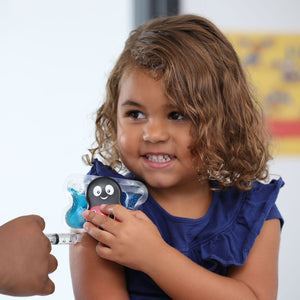
The technology used in VibraCool devices is called M-Stim, short for Mechanical Stimulation. It was developed by Pain Care Labs, a US-based medical device company that has been researching non-drug pain relief since 2006. Their devices are used in hospitals, physiotherapy clinics, and sports recovery settings worldwide.
Alongside the vibration, VibraCool uses cold or heat therapy simultaneously. The cold reduces inflammation and activates a second pain-relief mechanism, called Descending Noxious Inhibitory Control, where intense cold raises the body's overall pain threshold. The heat option is particularly useful for muscle spasms and chronic stiffness.
The combination of vibration and thermal therapy is what sets it apart from TENS, which uses only electrical stimulation.
What Does the Research Show: Vibration Therapy vs TENS?
A crossover clinical trial presented at the American Academy of Physical Medicine and Rehabilitation in 2019 compared high-frequency vibration therapy directly against TENS for musculoskeletal pain. The results were clear.
Mean pain relief with vibration therapy was 3.60, compared to 1.40 with TENS, a statistically significant difference (P<0.0001). That makes vibration therapy 3.4x more effective than TENS in this trial. Vibration therapy produced the strongest results for spine pain, injury-related pain, and post-surgical pain. TENS performed better for osteoarthritis.
You can read the full published abstract here.
The takeaway is straightforward: if you're recovering from an injury or surgery, or dealing with muscle and joint pain, vibration therapy has stronger clinical support than TENS for those specific situations. For osteoarthritis or chronic nerve pain, TENS remains a reasonable option.
What Conditions Does Vibration Therapy Help With?
Plantar Fasciitis and Heel Pain
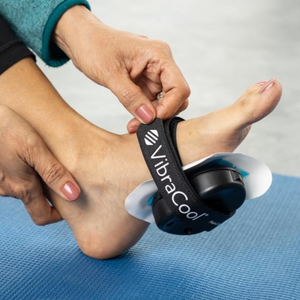
Plantar fasciitis is one of the most common causes of heel pain in Australia. It involves irritation of the tissue band running along the base of the foot and is notoriously slow to settle. Ice is a standard recommendation, but combining it with high-frequency vibration at the arch increases blood flow to the area, which supports recovery alongside reducing pain. VibraCool Plantar is specifically designed for this, with the strap and ice packs positioned precisely at the arch of the foot.
Knee and Ankle Pain
For knee pain, whether from post-surgical recovery, ACL injury, IT band syndrome, patellofemoral pain, or general joint inflammation, vibration therapy applied to the area can reduce pain and support recovery. One patient reported sleeping through the night for the first time after using VibraCool for arthritis affecting both the knee and foot. VibraCool Extended is designed for the knee and ankle, with a 28-inch compression strap that fits larger joints comfortably.
Back, Shoulder, Neck, and Hip Pain
A 2023 Phase I clinical pilot study published in Frontiers in Pain Research found that multi-modal mechanical stimulation reduced both acute and chronic low back pain, with results independent of patient age or how long the pain had been present. VibraCool Flex covers the back, shoulder, neck, and hip, and comes with both an ice pack and a heat pack, since heat is often more helpful than cold for muscle spasm and chronic stiffness in these areas.
Elbow and Wrist Pain
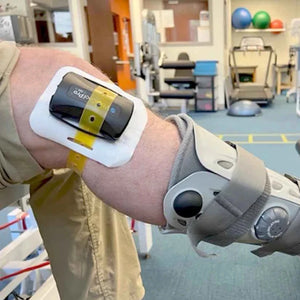
For tennis elbow, golfer's elbow, carpal tunnel discomfort, and post-surgical wrist or elbow recovery, VibraCool EasyFit allows one-handed application via a D-ring strap. A 2017 study found that vibration therapy after distal radius (wrist) fracture surgery was an effective management strategy for both pain relief and hand function, with improvements persisting for up to two months.
Post-Surgery Recovery at Home
After surgery, having a way to manage pain at home without relying solely on medication is something most patients want. A 2015 study in the American Journal of Sports Medicine found that five minutes of daily vibration after arthroscopic rotator cuff repair provided meaningful pain relief at six weeks compared to placebo. VibraCool can be placed on the skin above dressings, so it doesn't need direct contact with the wound site.
"I used VibraCool and for the first day, I didn't need my pain pills after knee surgery. Wish I had discovered this product years ago!"
— VibraCool customer
"Not gonna lie, was skeptical. But this thing is the only relief for my fibromyalgia pain. I don't like the feeling of ice on my skin, but the vibration helps with both reducing pain and making the ice feel less cold. 100% would recommend to anyone with chronic pain."
— VibraCool Extended customer
Is VibraCool Safe to Use?
VibraCool is FDA 510(k) cleared and TGA accepted in Australia. It is also suitable for use with pacemakers, something that TENS machines are not, as electrical stimulation can interfere with pacemaker function. It contains no medication, no chemicals, and is battery operated with no cords or outlets required.
It is not recommended for use directly over broken skin, open wounds, or areas with known circulatory conditions. As with any pain management device, check with your doctor or physiotherapist if you are unsure whether it's appropriate for your specific situation.
Which VibraCool Model Is Right for Me?
There are four models, each designed for a different area of the body:
- Elbow, wrist, or forearm pain → VibraCool EasyFit — 20-inch neoprene strap, one-handed application, 10-minute auto shut-off
- Knee, ankle, calf, or hamstring pain → VibraCool Extended — 28-inch strap for larger joints, manual toggle switch
- Back, shoulder, neck, or hip pain → VibraCool Flex — 48-inch band, includes both ice and heat packs
- Plantar fasciitis, heel spur, or foot pain → VibraCool Plantar — positions ice and vibration precisely at the arch of the foot
All models are portable, battery operated, and available with flat-rate shipping across Australia and New Zealand. NDIS participants may be able to claim VibraCool depending on the purpose it is being used for. Check with your plan manager to confirm eligibility.
👉 Shop the full VibraCool range in Australia
👉 Check NDIS Eligibility
Frequently Asked Questions
Is vibration therapy better than a TENS machine for muscle pain?
In a direct clinical trial comparing the two for musculoskeletal pain, high-frequency vibration therapy was 3.4x more effective than TENS, particularly for injury-related, spine, and post-surgical pain. TENS showed stronger results for osteoarthritis. The right choice depends on the type of pain you have.
Can I use VibraCool if I have a pacemaker?
Yes. VibraCool uses mechanical vibration rather than electrical stimulation, so it is suitable for people with pacemakers. TENS machines are generally not recommended for people with pacemakers, as the electrical stimulation can interfere with the device.
How long should I use VibraCool each session?
10 to 20 minutes per session is recommended. It is not recommended to use for more than 20 minutes at a time. Some models have a 10-minute auto shut-off.
Can I use VibraCool after surgery?
Yes. VibraCool can be placed on the skin above dressings without direct contact with the wound. Clinical research supports its use for post-surgical pain relief for knee, shoulder, wrist, and elbow procedures.
Does VibraCool help with plantar fasciitis?
Yes. The VibraCool Plantar model is specifically designed for plantar fasciitis, heel spur pain, gout, and other foot conditions. It positions ice and vibration precisely at the arch of the foot to address both inflammation and pain simultaneously.
Is VibraCool available in Australia and New Zealand?
Yes. Buzzy4Shots is the authorised distributor of VibraCool for Australia and New Zealand. All models are available with flat-rate shipping nationwide.
Buzzy4Shots is Australia and New Zealand's authorised distributor of VibraCool pain relief devices. FDA 510(k) cleared and TGA accepted in Australia. Always consult your healthcare professional or physiotherapist for advice specific to your condition.