

When you have Type 1 diabetes, needles are part of every day. Insulin injections, blood glucose checks — it happens multiple times a day, every day. That adds up.
Most people get used to the routine of it over time. But the discomfort, and the anxiety around needles, doesn't always settle. For some people — especially children — it can actually get harder over time, not easier.
If that's where things are at for you or your child, this guide covers why needle pain happens, some simple techniques that help, and a clinically tested device that many Australian families with Type 1 diabetes have found useful.
Why Do Insulin Injections Hurt — and Why Does Needle Anxiety Sometimes Get Worse?
There are two things happening when someone finds injections difficult — the physical pain, and the anticipation of it.
When your brain expects pain repeatedly, it can become more sensitive to that pain signal over time. This is a normal neurological response. It doesn't mean someone is overreacting. It means the nervous system has learned to prepare for something uncomfortable, and that preparation can make the experience feel more intense.
For children with Type 1 diabetes, this often shows up as increasing distress before injection time — even after months or years of managing the condition. Adults experience this too. It's one of the more common reasons people delay or skip doses, which affects blood sugar management.
There are practical things you can do to address both sides of this.
8 Ways to Reduce Insulin Injection Pain at Home
1. Let Your Insulin Come to Room Temperature First
Cold insulin from the fridge stings more. Taking it out 20 to 30 minutes before use makes the injection noticeably more comfortable.
2. Rotate Your Insulin Injection Sites Regularly
Injecting into the same area repeatedly causes changes in the tissue over time — it becomes thicker and affects how well insulin absorbs. This is called lipohypertrophy. Moving between the abdomen, thighs, upper arms, and buttocks keeps the skin in better condition and injections more comfortable.
3. Pinch the Skin Before the Needle Goes In
For children or leaner areas of the body, gently pinching a fold of skin before injecting helps make sure the needle stays in the fatty layer under the skin, rather than going into the muscle below. Muscle injections hurt more. Your diabetes nurse can show you the right technique for your situation.
4. Check You Are Using the Correct Injection Angle
Most adults inject at 90 degrees. Leaner individuals or young children may need a 45-degree angle. Your diabetes educator is the best person to confirm what's right for you specifically.
5. Use Distraction to Help the Brain Focus Elsewhere
When the mind is genuinely focused on something else, the brain has less capacity to process pain. Counting out loud, watching a short video, or holding something textured all work well. For children, being actively engaged during the injection consistently makes a difference to how much pain and fear they report. DistrACTION Cards — designed for children aged 18 months to 7 years — give kids something to focus on during the procedure and work particularly well alongside Buzzy. Start the distraction before the injection, not after — that's when it works best.
6. Use a Fresh Needle Every Time
Pen needles are made for one use. After one injection, the tip is no longer as sharp, which causes more discomfort and can damage the skin over time. A new needle each time makes a real difference.
7. Try to Stay Relaxed During the Injection
A tense muscle makes the injection more uncomfortable. This is harder for anxious children, which is why having something to focus on or hold during the injection can genuinely help.
8. Apply Cold and Vibration to the Injection Site Beforehand
This one is worth explaining, because it's based on how the nervous system works.
How Cold and Vibration Help Reduce Needle Pain
The nervous system processes different types of sensation through different pathways. Cold temperature and vibration travel along pathways that can reduce how much pain signal reaches the brain.
It's the same reason rubbing a bumped elbow instinctively helps, or why cold water soothes a sting. The other sensation occupies the nerve pathway and reduces how much pain is felt.
This is well-established in pain research, and it's what a device called Buzzy is based on.
What Is Buzzy and How Does It Help With Insulin Injections?
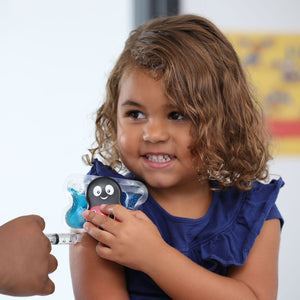
Buzzy is a small hand-held device that combines cold therapy — through a frozen gel pack — with gentle vibration to reduce pain at the injection site. It contains no medication, no chemicals, and doesn't pass any electrical current through the body.
It is TGA-approved for use in Australia, has been evaluated in over 50 peer-reviewed clinical trials, and has been used in more than 37 million procedures worldwide. It is suitable for children from 18 months of age.
How to Use Buzzy for an Insulin Injection
- Freeze the gel wings for at least 2 hours beforehand
- Attach the wings to the device and turn it on
- Place Buzzy directly on the injection site for 30 to 60 seconds before injecting
- Then move it just above the site and keep it there during the injection — it works best placed between the pain and the brain
- The cold reduces sensation in the skin, and the vibration works to reduce the pain signal reaching the brain
Most people find they feel significantly less discomfort. Some feel nothing at all. The gel wings stay cold for around 10 minutes at room temperature, which is more than enough for an injection.
For children, Buzzy also gives them something to hold and focus on during the procedure, which helps with the anxiety side of things as well. Having some sense of control during an injection can make a meaningful difference.
"My 4 year old son has Type 1 Diabetes. I came across Buzzy for pain relief and decided to try it. I am so glad I did! Buzzy works like magic during site insertion."
— Abby F., Australian T1D parent
"My daughter was recently diagnosed with diabetes and has always been fearful of needles. We were recommended Buzzy and we are so glad we went ahead and got one. It's been a god-send. My daughter takes control of Buzzy and knows exactly what to do. It's made everything so much more manageable."
— Australian T1D parent
Which Buzzy Device Is Right for Diabetes Management at Home?
The Buzzy Personal Kit ($105) is designed for single-patient home use. It is well suited to daily insulin injections and blood glucose finger sticks. It has a manual power switch so it stays on for as long as you need — which makes it practical for multiple injections or longer procedures.
It comes with 2 ice wings and a hands-free strap, and is available with flat-rate shipping across Australia.
Please note: if you have diabetic neuropathy or any known sensitivity to cold, speak with your doctor before using the ice wings.
NDIS participants may be able to claim Buzzy depending on the purpose it is being used for. We recommend checking with your plan manager to confirm eligibility.
👉 Shop the Buzzy Personal Kit
👉 Check NDIS Eligibility
A Note on the Day-to-Day Reality of Managing Type 1 Diabetes
Managing Type 1 diabetes takes a lot of ongoing effort — the monitoring, the planning, the injections. When injection time becomes a source of real distress for you or your child, it affects more than just those few minutes. It can make the whole business of managing the condition feel harder.
If that's where things are at, it's worth knowing there are options that don't involve medication and that have a reasonable amount of clinical evidence behind them.
Frequently Asked Questions About Insulin Injection Pain Relief
Can Buzzy be used for both insulin injections and blood glucose finger pricks?
Yes. For finger pricks, place Buzzy on the hand or finger for 30 to 60 seconds before the check, then move it just above the site during the procedure.
Is Buzzy safe for young children with Type 1 diabetes?
Yes, Buzzy is suitable for children from 18 months of age. For very young children who may not tolerate the cold, the vibration alone will still provide some relief and acts as a helpful distraction.
How long do the Buzzy ice wings stay cold?
Around 10 minutes at room temperature, which is sufficient for an injection procedure.
Where do I place Buzzy on the body for an insulin injection?
Place it directly on the injection site for 30 to 60 seconds before the needle goes in, then move it just above the site and keep it there during the injection. It works best placed between the pain and the brain.
Is Buzzy covered by private health insurance or NDIS in Australia?
Private health cover varies by insurer and policy — check with your provider directly. NDIS participants may be able to claim Buzzy depending on their plan and the purpose it is being used for. Check with your plan manager to confirm eligibility.
Buzzy4Shots is Australia and New Zealand's authorised distributor of Buzzy pain relief devices. TGA-approved for use in Australia. Always consult your healthcare professional for advice specific to your condition.

